Mann Craft — Indigo Dye Leather
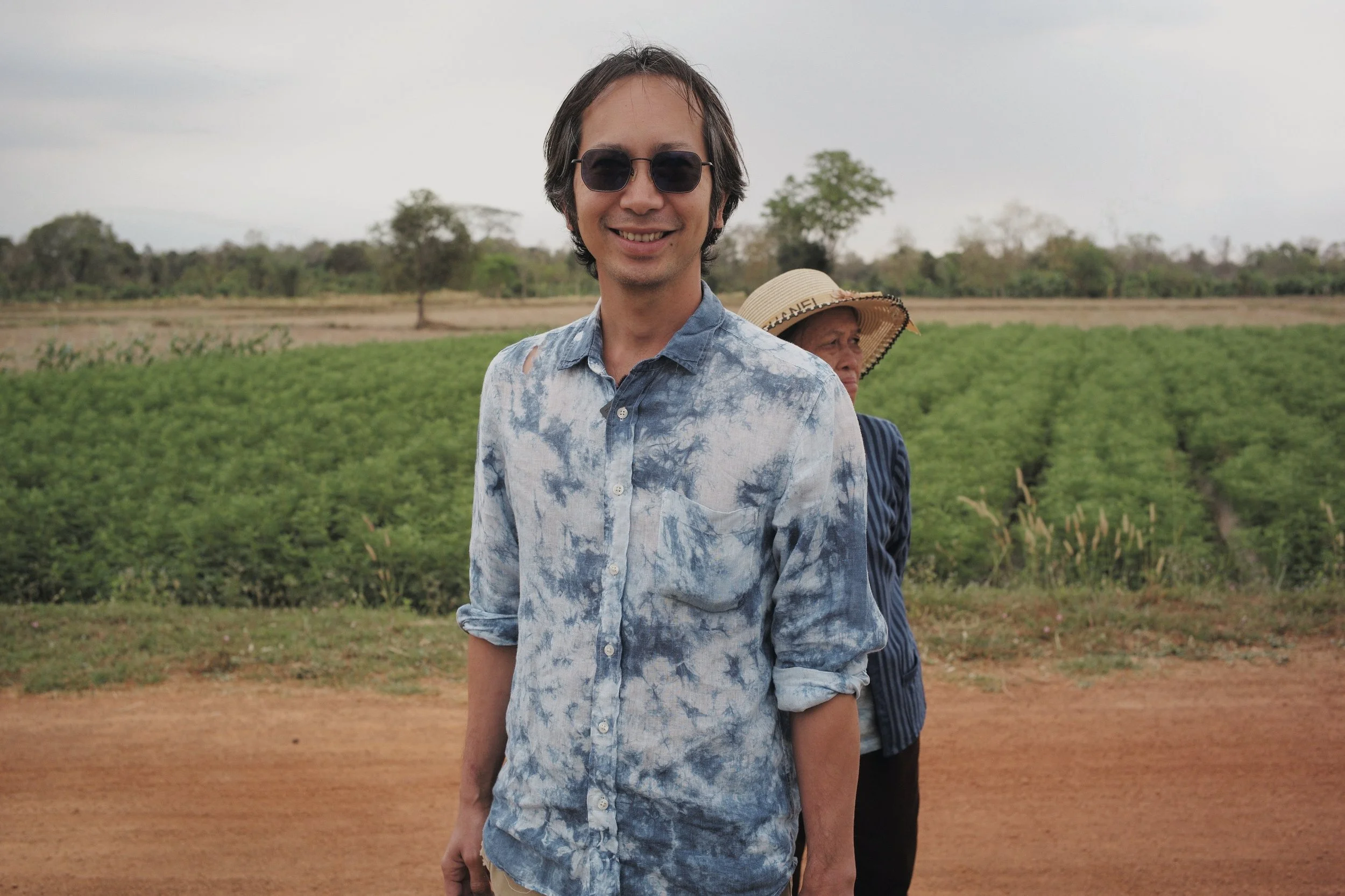
Indigo is a form of living knowledge that has been deeply rooted in the everyday culture of Sakon Nakhon for generations. Its presence extends from the dyeing of cloth, cotton and silk to its use in mural paintings found in temples throughout Northeastern Thailand. Indigo is distinctive because it can be understood as a living colour—one that is born directly from nature. For MANN CRAFT and its founder, artist and indigo practitioner Prach Niyomkar, years of working with the material have continually returned him to the same question: if indigo were no longer confined to fabric, what else could it become?
What many may not know is that Prach’s interest in leather preceded his work with indigo. While completing his thesis, he studied leather stitching in Bangkok’s Wongwian Yai district, driven by a fascination with leathercraft and, at one point, a dream of becoming a leather artisan at Hermès. He later discovered that accomplished craftsmanship demands patience, discipline, and rigorous practice. Yet his fascination with leather remained—its texture, its appearance, and even its scent. Bringing indigo and leather together was therefore more than an experiment with a new material. It was the meeting of two interests that had developed alongside one another over many years.
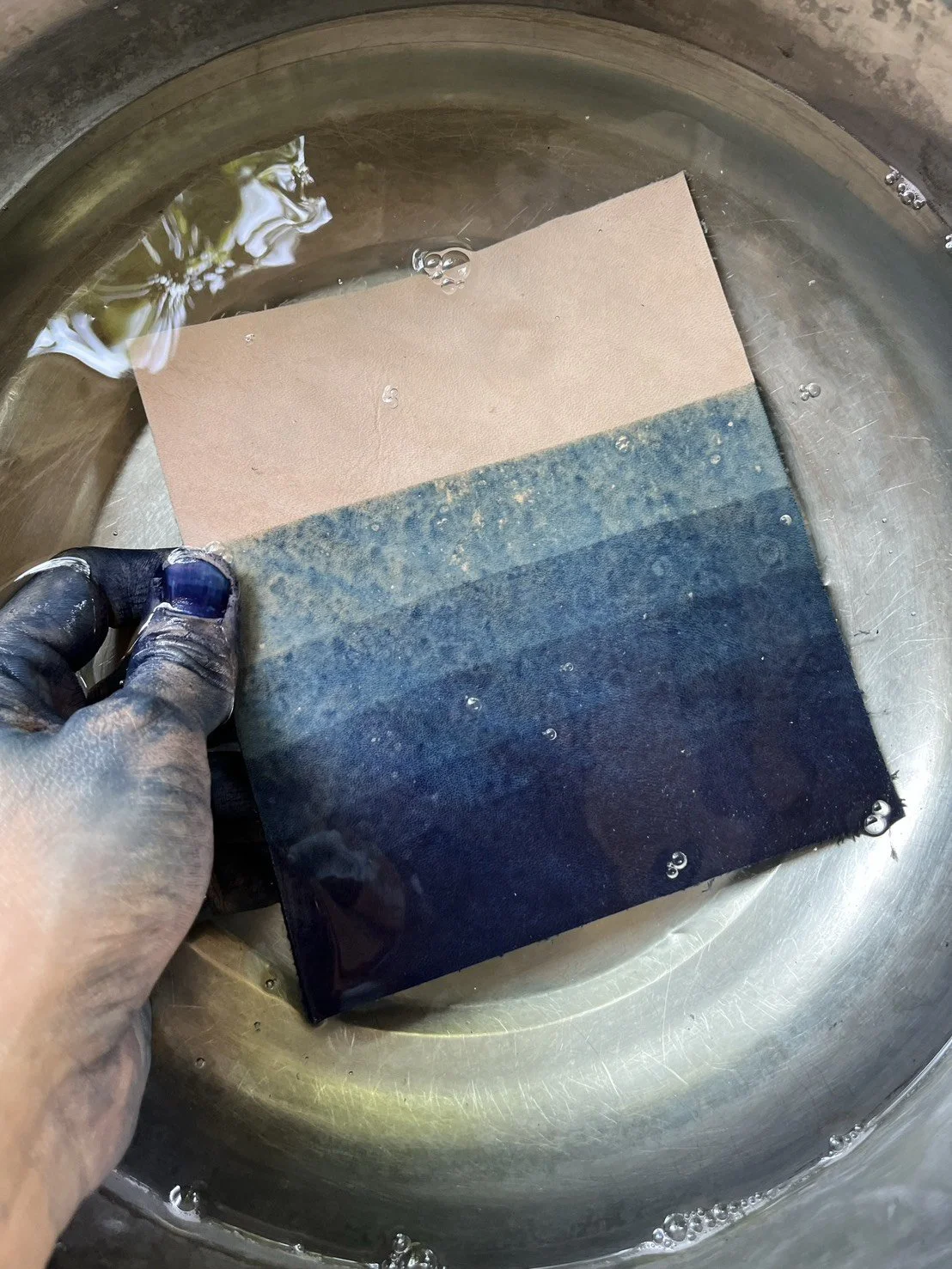
The process began with vegetable-tanned leather. Early trials revealed that an indigo formula developed for fabric could not simply be transferred to leather. Each type of leather has its own characteristics and reacts differently to colour, requiring a new formula developed specifically for the material. The dyeing process begins with an indigo vat, fermented until its microorganisms become active. From there, the proportions and ingredients are adjusted through repeated trials. Every stage remains grounded in the use of natural dyes, without relying on substances that are harmful to the environment. As the formula changes, so too does the resulting shade.
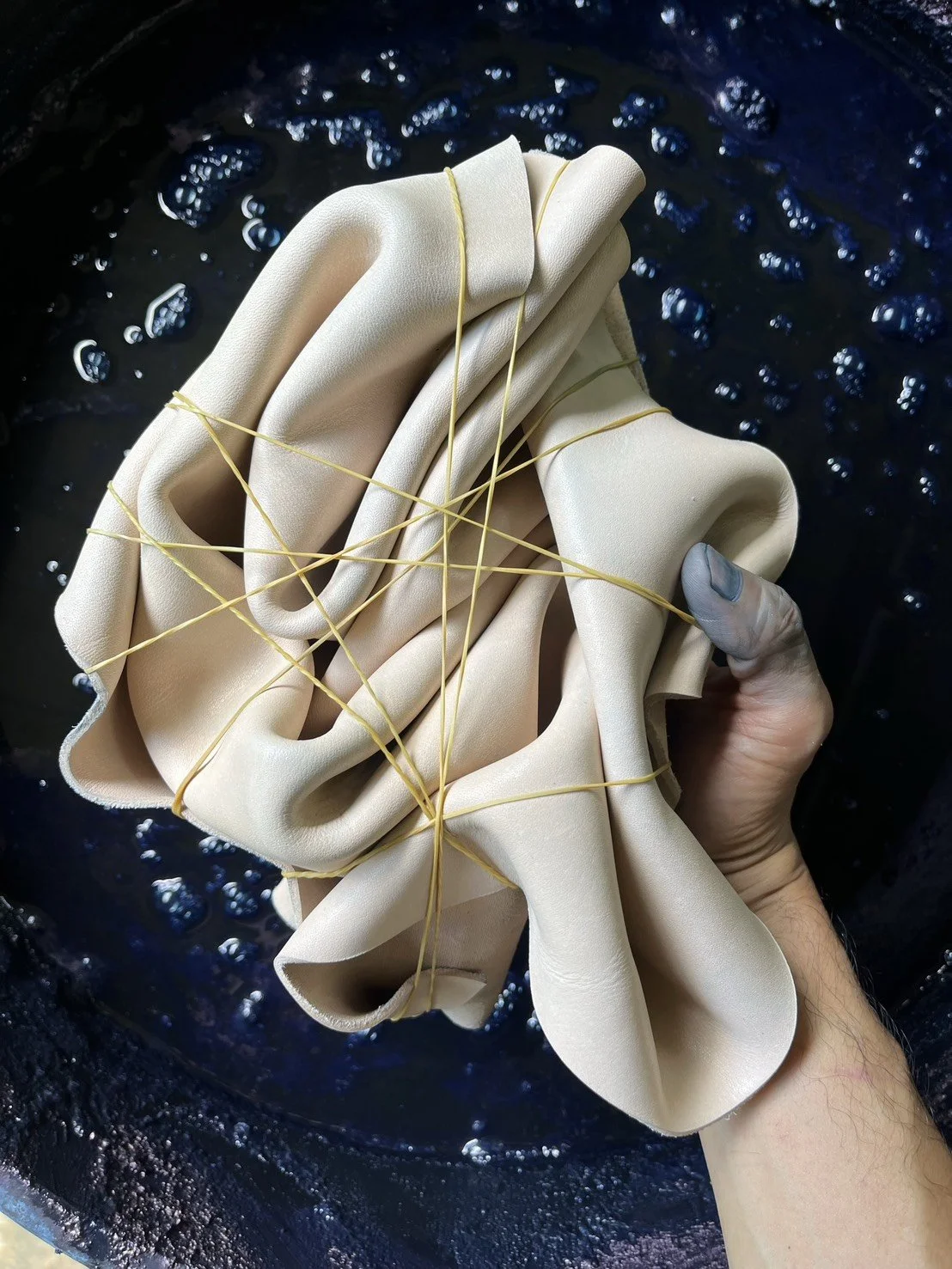
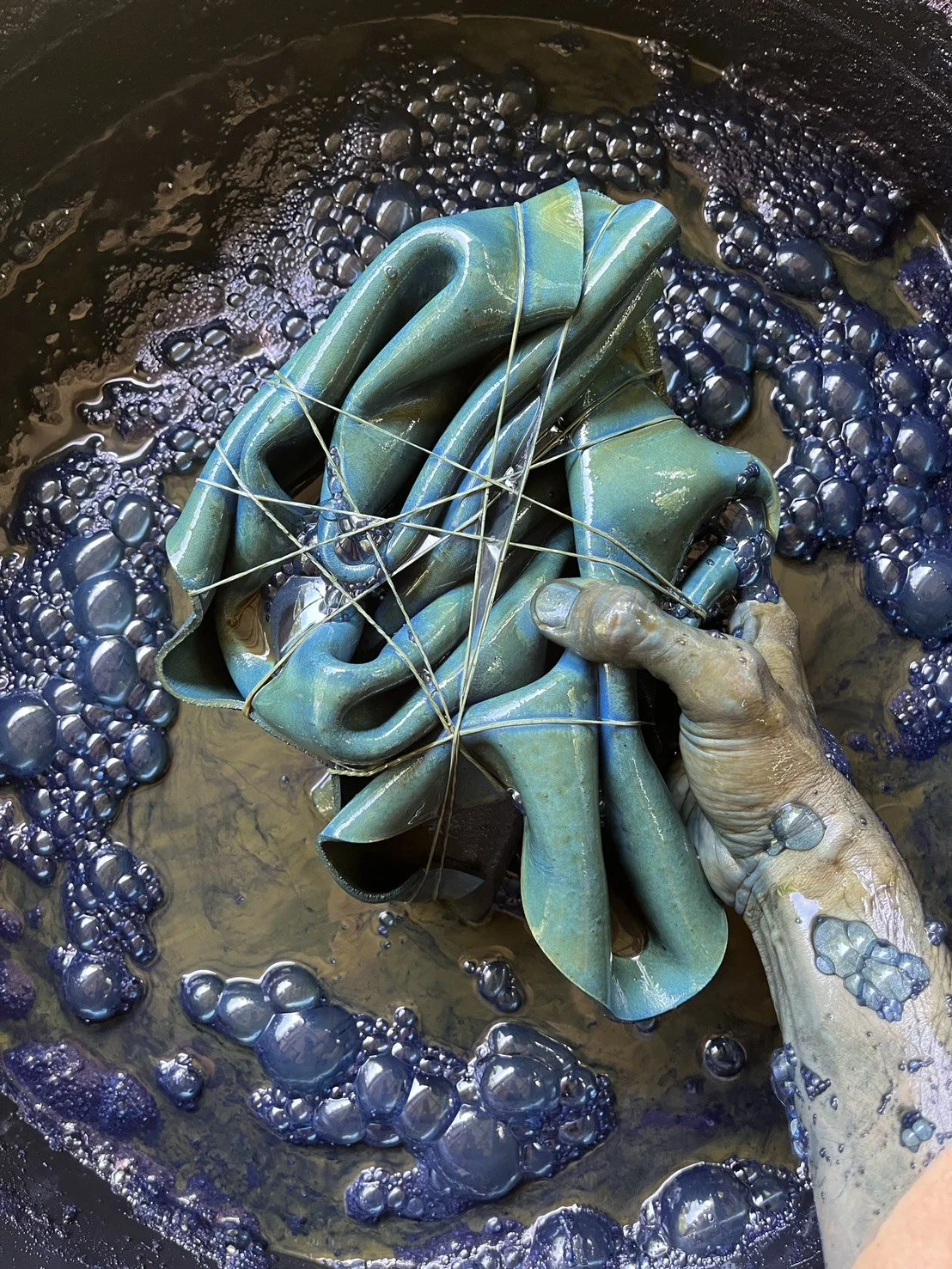
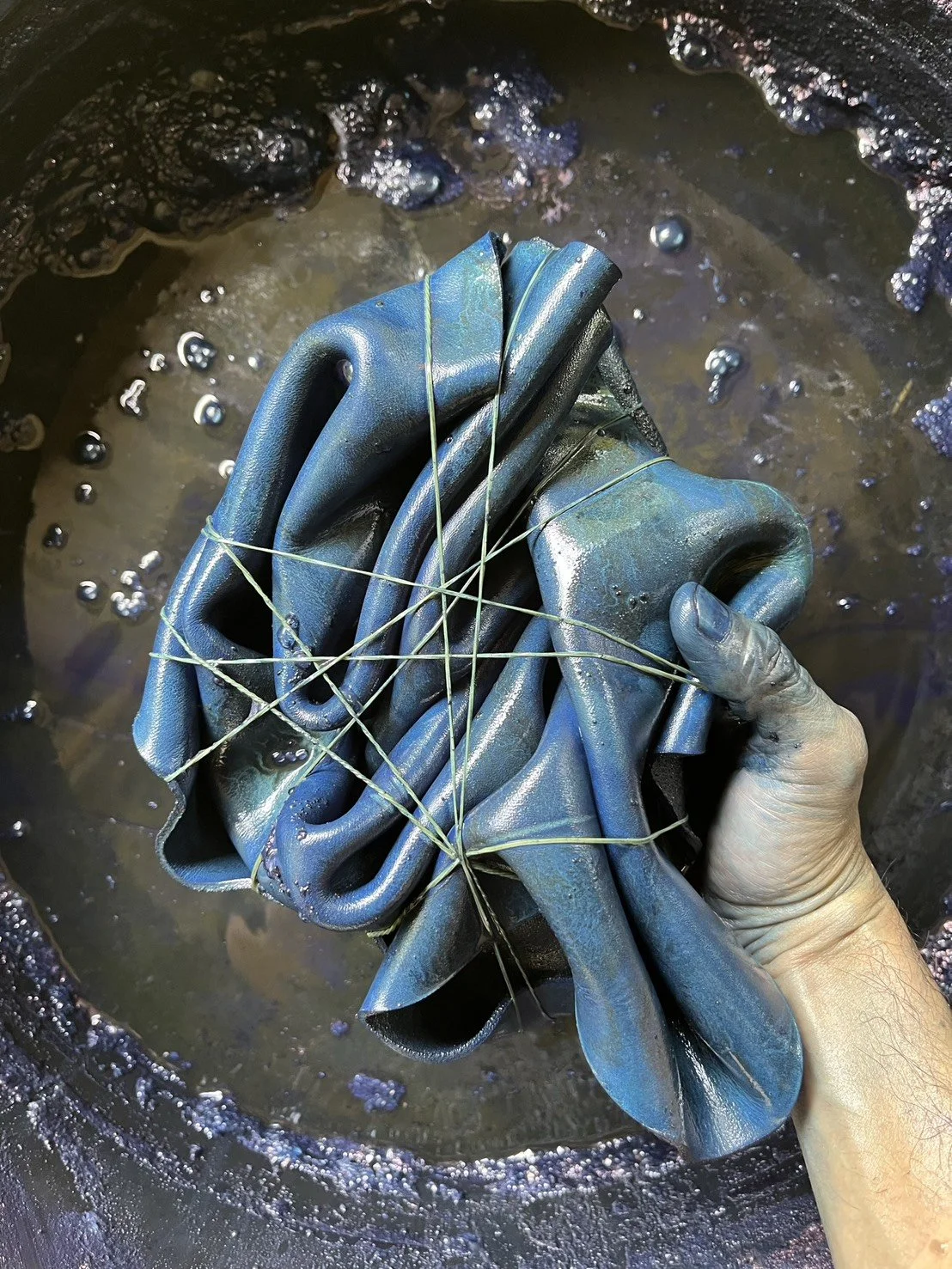
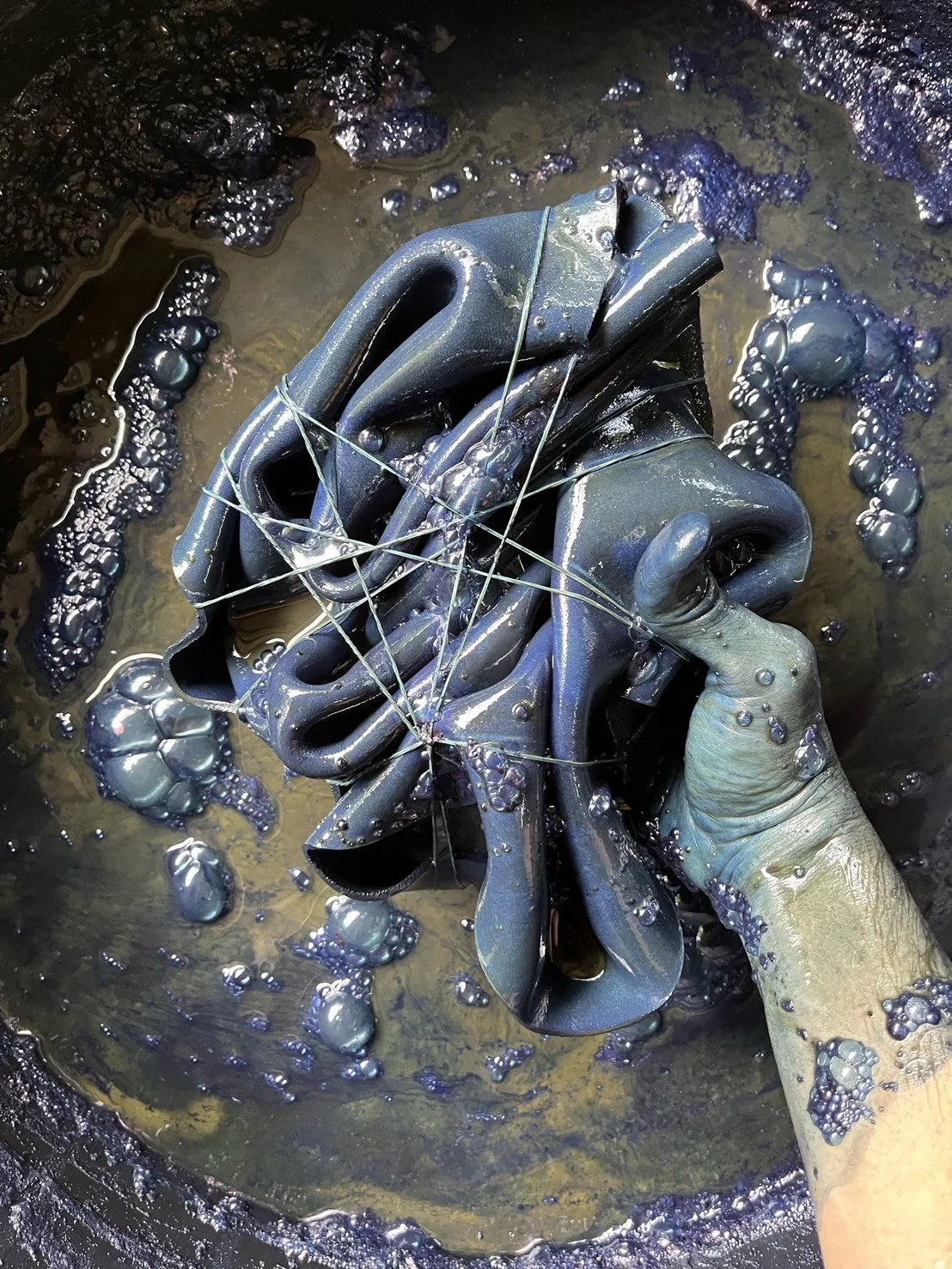
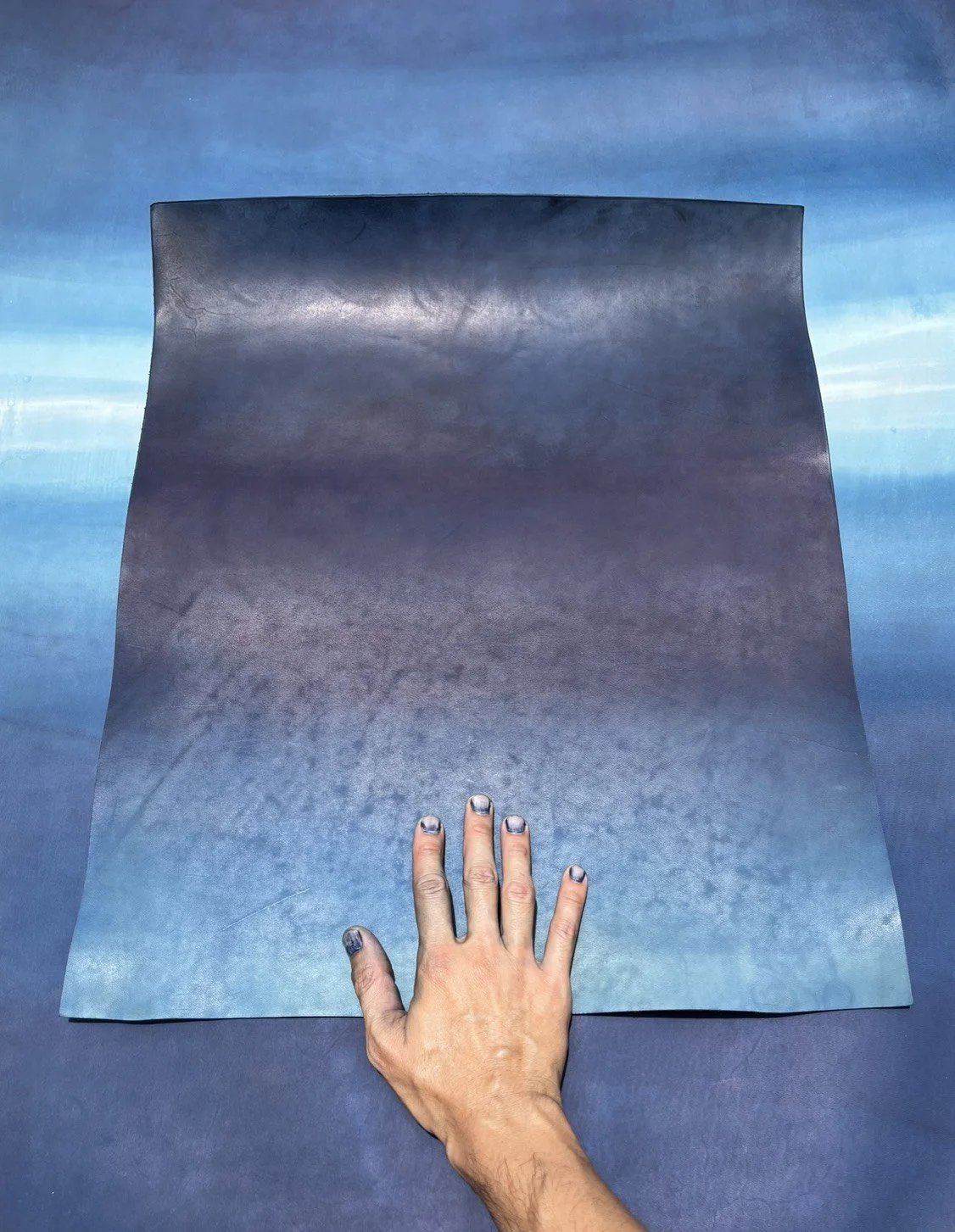
The fascination of indigo-dyed leather lies in the fact that its outcome can never be fully determined in advance. The colour of wet leather may differ considerably from its appearance when dry. It gradually deepens, developing into a blue with subtle violet undertones. The tannins naturally present in the leather also participate in the dyeing process, allowing the colour to evolve in its own way. There is no fixed answer to what shade a piece of leather will ultimately become. The process depends on experience, observation, and the ability to anticipate change based on what can be seen at each stage. Every type of leather becomes a conversation with indigo rather than a passive surface intended merely to receive colour.
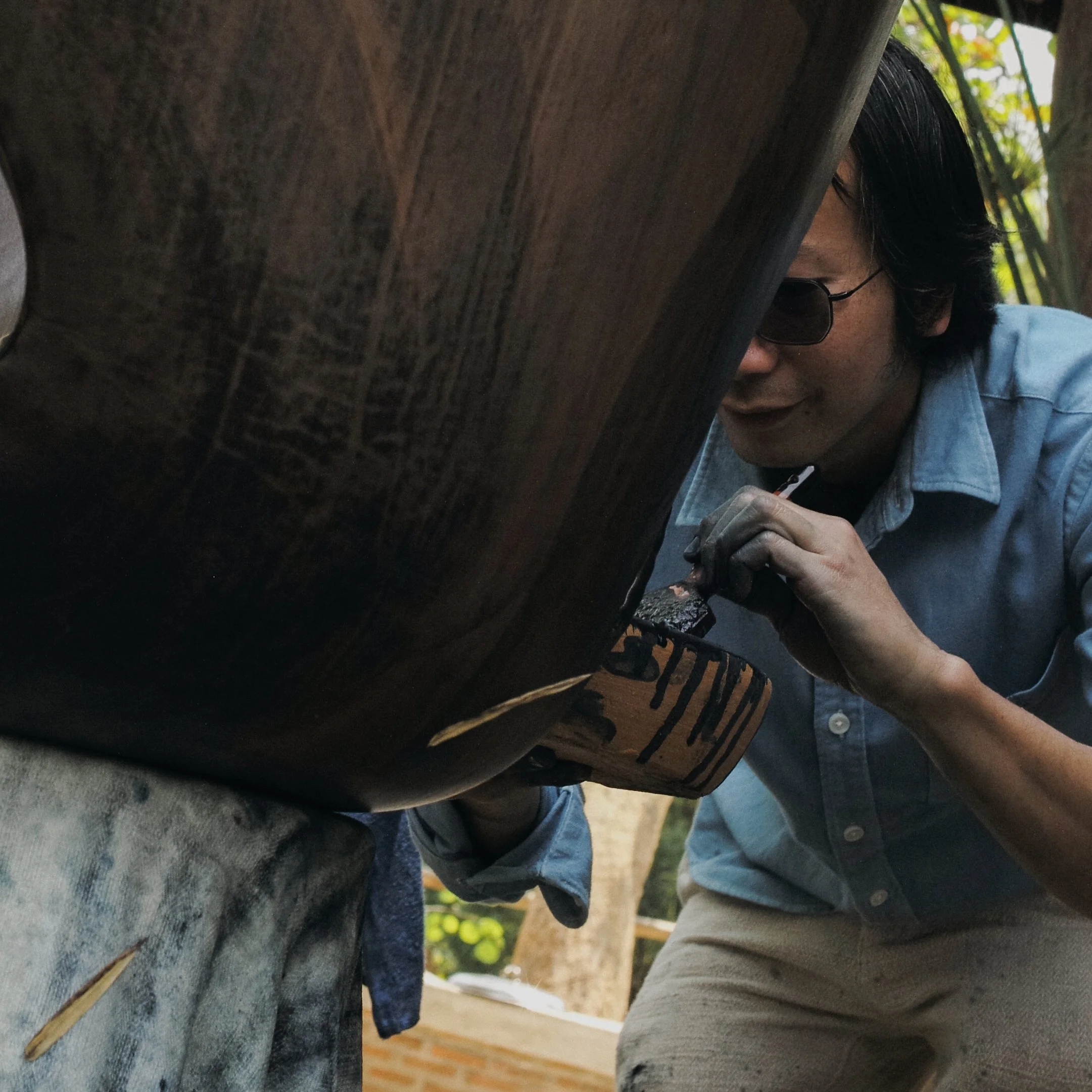
As the scale of the material changes, the tools must change with it. A small vat suited to everyday dyeing gives way to larger vessels capable of holding full hides and expansive pieces of leather. These have included cowhide from Fritz Hansen, stingray skin, parchment, and crocodile leather—materials that each produce distinctive results when brought into contact with indigo. The larger the surface, the greater the consequence of even the smallest error. Once a mistake occurs across an entire hide, it cannot be easily corrected. Each dyeing session therefore requires careful preparation, precision, and the experience accumulated through years of working with indigo.
For Prach, the appeal of bringing indigo and leather together lies in a quality they share: a beauty that transcends time. Leather has accompanied human life since prehistory. Indigo likewise carries a long history of knowledge passed down from one generation to the next. When the two materials meet, they create a new character while retaining visible traces of nature, handwork, and process across their surfaces. This encounter leads to a question larger than the dyeing of leather: where does the boundary between art and craft lie? For Prach, craft does not emerge from the material alone. It is formed through skill and experience, accumulated over time until they become an embodied form of knowledge. Working with indigo requires all five senses—listening, observing, smelling, touching, and even tasting. The process resembles cooking: one must first learn through experience before learning how to adjust the ingredients and develop a language, or a flavour, of one’s own.
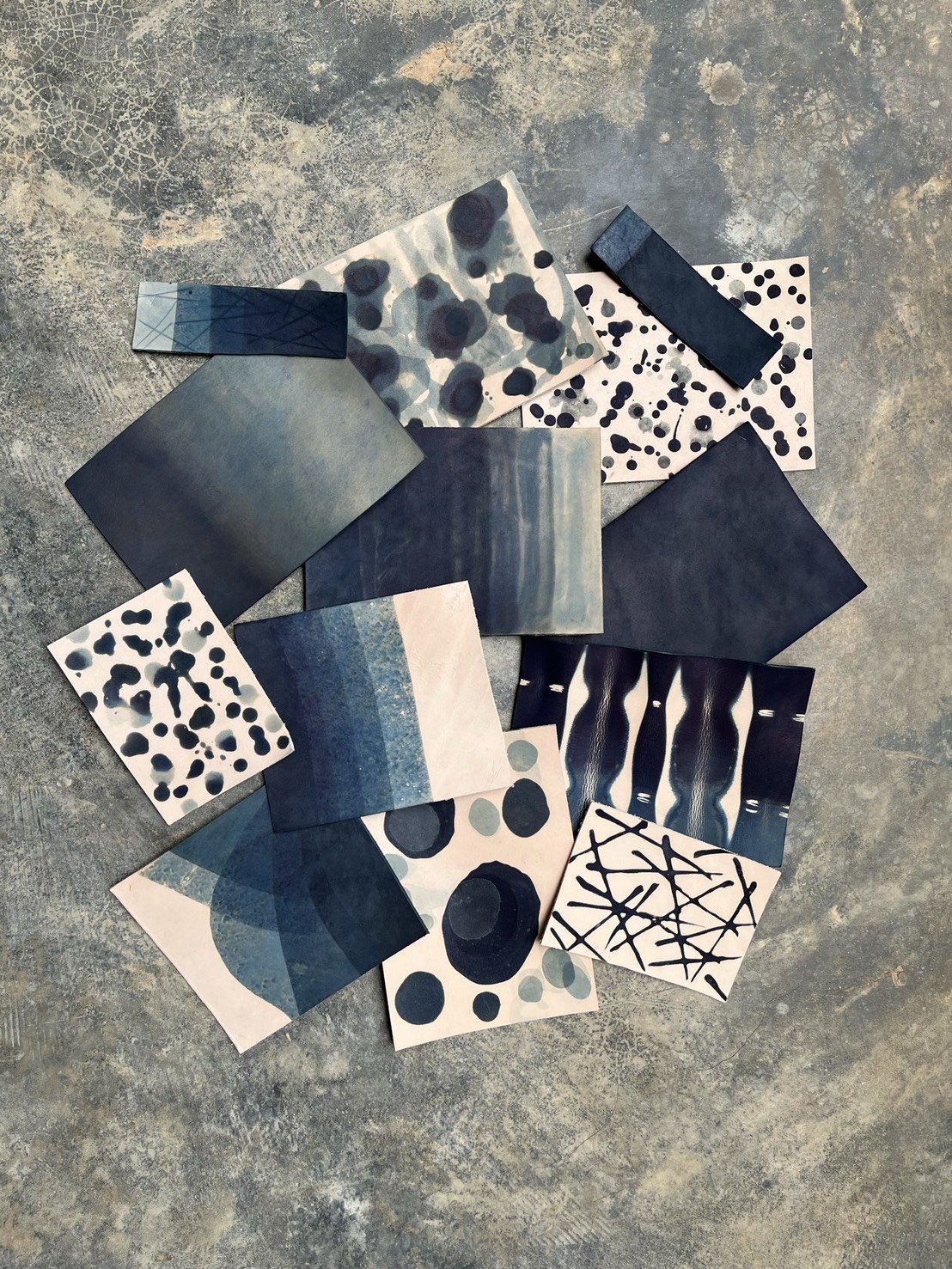
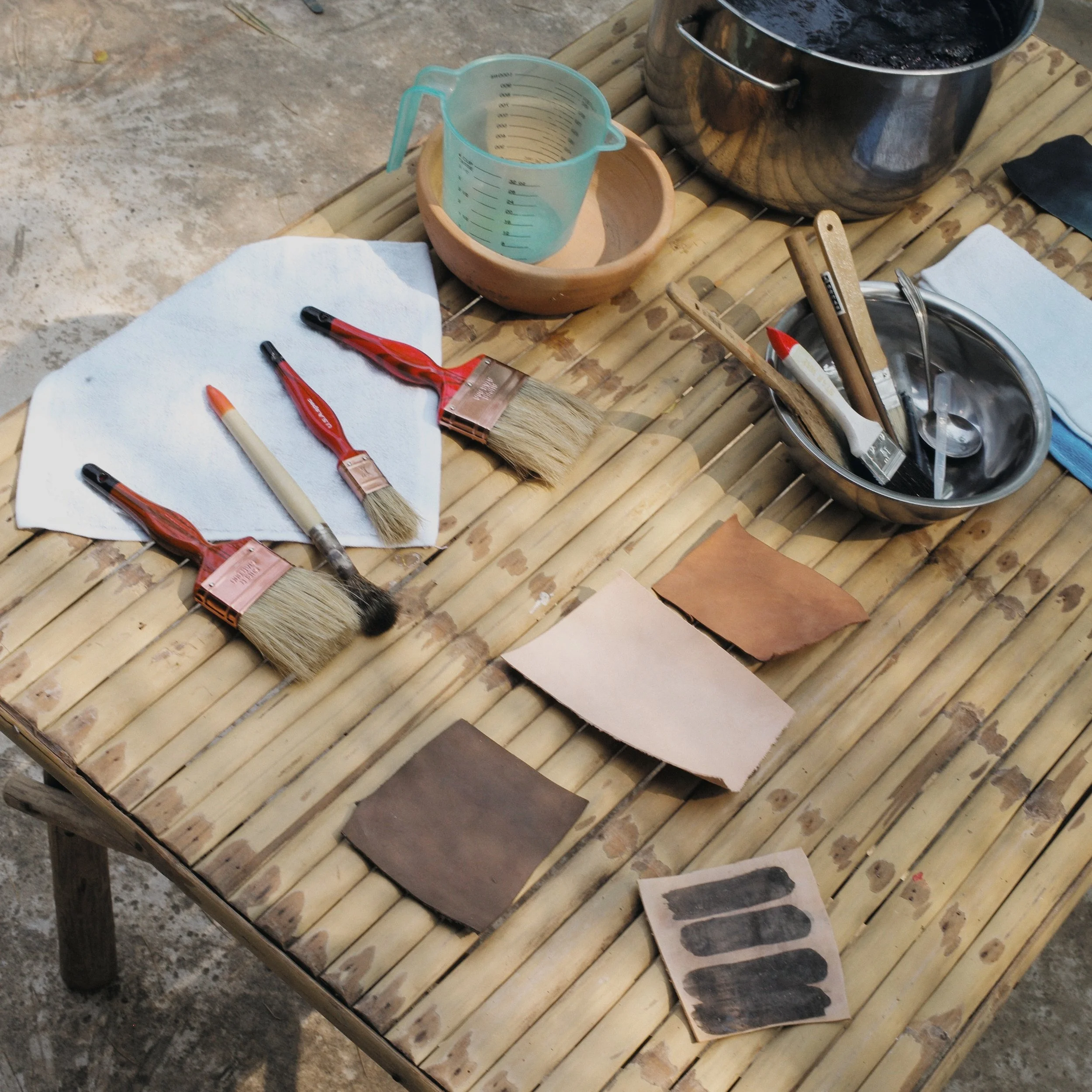
The work gains further dimension when techniques such as stitching, weaving, and interlacing are introduced. These details are not simply methods of assembling materials. They are records of time, skill, and the maker’s hand, embedded within the finished piece.
This experiment may not represent the final destination for indigo on leather. Instead, it may mark the beginning of a new set of questions. Indigo could be extracted into an ink and used to draw or paint directly onto leather. Within the field of design, the material could also be developed into furniture, fashion, or collectible objects intended to endure over time. Both leather and indigo continue to change as they age. The more they are handled and used, the more their surfaces and colours reveal characteristics unique to each piece. The material develops alongside its owner, carrying evidence of use and time as part of its identity.
Ultimately, the most meaningful outcome of this experiment may not be the discovery that leather can be dyed with indigo. Rather, it is the possibility of allowing traditional knowledge to travel beyond its original context and encounter new materials, new forms of expertise, and new ways of thinking. Indigo is no longer limited to its role as a colour for dyeing cloth, just as leather is no longer only a material for making functional objects. When the two come together, a single surface becomes a site of experimentation between nature, skill, time, and creative thought—a space in which the boundary between art and craft gradually begins to disappear.